
Rope Gangster Crime City
Round Square GamesStrategy
4.414.00 Reviews
- Version
- 1.44
- Installs
- 10.00M
- Age Rating
- Teen
Screenshots

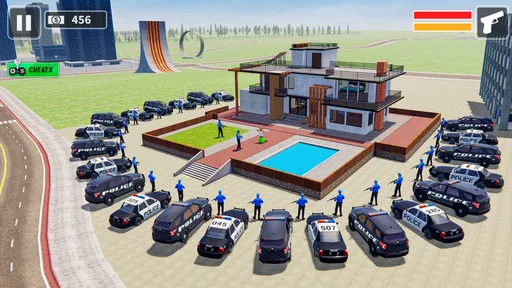
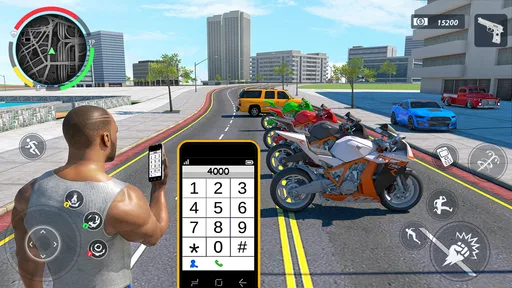
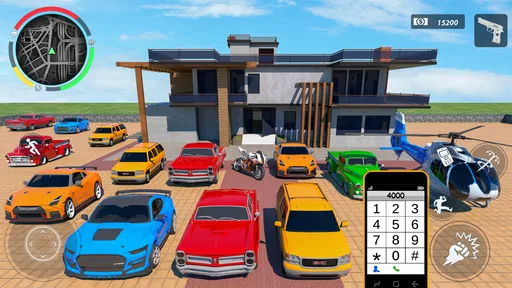
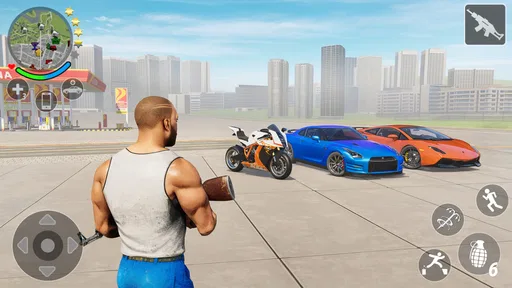
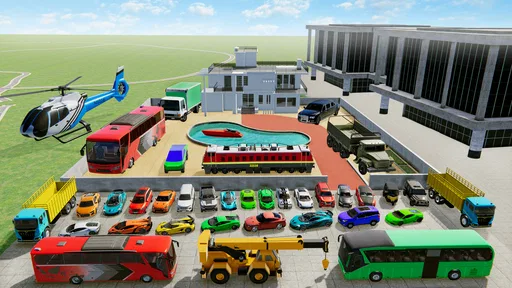
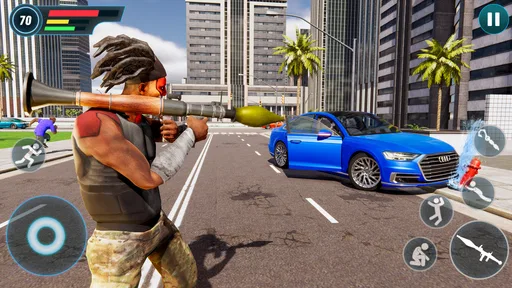
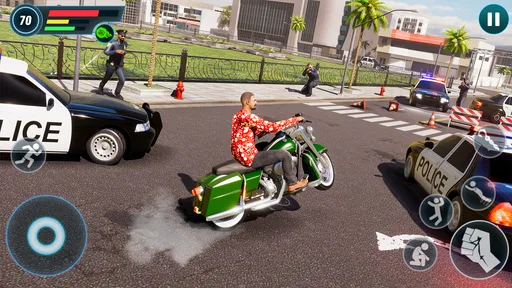
Our Review of Rope Gangster Crime City
 Analysis by Appyee
I approached Rope Gangster Crime City as a quick, action-focused strategy game rather than a deep city simulator. Its central idea is easy to understand: you play a rope-swinging gangster, build up access to weapons and vehicles, and try to take control of the streets. That combination gives it an immediate, playful appeal, especially if you enjoy games that let you cause trouble quickly instead of making you complete a long tutorial before anything interesting happens.
After spending time with it, my opinion is fairly clear. This is best for players who want a free mobile game built around movement, combat, and short bursts of open-city chaos. It is less convincing for someone looking for a carefully balanced strategy experience, a serious crime story, or the depth of a large console-style sandbox. The rope ability is the feature that gives the game its identity, but the overall experience depends on whether you enjoy experimenting with that movement and accepting a certain amount of arcade-style roughness.
What to judge before downloading
The first decision is whether you want strategy in the traditional sense or strategy-flavored action. The game is categorized as strategy, yet my time with it felt much closer to a free-roaming action playground with tactical choices layered on top. You still think about which weapon to use, when to bring in a vehicle, and how to approach a street encounter, but the focus is on immediate control rather than long-term planning.
That distinction matters. If you usually play turn-based strategy, base-building games, or detailed management titles, this may feel too loose. If you like experimenting with movement and making quick decisions while the situation changes around you, the format makes more sense. I found myself judging each moment by questions such as whether to stay on the ground, use the rope to reposition, or create distance before starting another fight.
The game is free, which makes it easy to try without committing money first. It carries a Teen content rating, so it is aimed at older players rather than young children. It also supports devices running Android 7.1 or later, a useful point for people using older phones. The current version is 1.44, and the developer is Round Square Games.
Another practical consideration is your tolerance for repetition. The core loop revolves around moving through the city, using available equipment, spawning vehicles, and taking on street-level trouble. That can be entertaining in short sessions, but it is not the kind of structure I would choose when I want a constantly changing campaign. The fun comes from what I decide to do with the tools, not from a highly elaborate progression system.
How the rope changes the way I played
The rope is more than a visual gimmick because it changes positioning. In a normal street fight, I could simply move toward an opponent or retreat, but the rope encourages a third option: break the expected path and approach from a different angle. I found it most useful when I stopped treating it as a fast-travel button and started using it to control distance.
A useful habit is to avoid swinging immediately whenever a fight begins. First, I look at the space around me and decide whether the rope will help me escape, reach a better position, or isolate one threat from another. Using it without a plan can leave the action feeling messy. Using it to interrupt an enemy’s rhythm makes the character feel much more agile and gives the street encounters a little more personality.
This also creates a trade-off between speed and control. Moving quickly can be exciting, but a rushed swing may put me somewhere less useful than where I started. For that reason, I recommend learning the rope in quiet moments instead of waiting until a crowded confrontation. A few minutes spent testing its reach and timing can make later encounters feel less random.
Weapons and vehicles as decisions, not decoration
Weapons and vehicles give the game its gangster sandbox flavor. The important point is not simply that they exist, but that they change how I approach a situation. A vehicle can help me move through the city with momentum, while a weapon may encourage a more direct confrontation. Switching between these options keeps the experience from becoming only a running-and-swinging game.
I found it more enjoyable to treat vehicles as temporary tools rather than something I had to keep using constantly. Driving can make movement feel faster and more dramatic, but staying in a vehicle is not automatically the best answer. Sometimes getting out gives me better control over a narrow area, while other times the vehicle is the easiest way to leave a bad situation. That choice is one of the more satisfying small decisions in the game.
The same applies to weapons. I would not recommend using the most aggressive option as a default response to every encounter. Trying different equipment helps reveal which situations reward direct pressure and which are easier when I create space first. This is one of the game’s less obvious strengths: it gives casual players room to experiment without demanding a complicated strategy guide.
Where the game wins
The strongest part of the experience is its immediacy. I can open it, move through the city, and start doing something active without needing to understand a large set of systems. The rope gives the controls a distinct hook, while vehicles and weapons make the environment feel more like a playground than a simple walking map.
That makes it a good choice for short breaks. If I have only a few minutes, I can focus on movement and a small street encounter rather than waiting for a long story sequence. The game also works well when I want to test my own ideas. Swinging into an area, escaping over a barrier, taking a vehicle, or changing equipment creates small self-directed challenges even when I am not following a carefully structured objective.
Its broad reach also says something about its accessibility. The game has passed ten million installs and holds an average rating of 4.4 from around twenty thousand ratings. Those figures do not guarantee that every player will enjoy it, but they suggest that the simple rope-gangster concept has connected with a substantial mobile audience.
I especially liked the way the movement encourages improvisation. In many mobile action games, the safest approach is to stay on a predictable path and repeat the same attack pattern. Here, the rope makes the environment feel more interactive because vertical movement becomes part of the decision-making. Even when the underlying objective is straightforward, the route I take can change the feel of the encounter.
A realistic everyday session
Imagine having a short commute or waiting for an appointment. I would not start this game expecting to complete a major campaign chapter. Instead, I would use the time to roam, test a vehicle, practice a few rope movements, and handle whatever street conflict appears next. That kind of session suits the game better than demanding a long, uninterrupted evening from it.
On a longer session, I would set myself a personal goal: move through an area without staying on the ground for too long, rely on a particular type of equipment, or escape every confrontation using the environment rather than simply pushing forward. These self-imposed rules make the sandbox more interesting and help prevent the basic loop from becoming repetitive too quickly.
Another useful approach is to separate experimentation from progress. When I am trying a new weapon or vehicle, I do not judge it only by whether it makes me win immediately. I pay attention to how it changes movement, timing, and risk. That mindset makes the game feel more strategic and gives each tool a clearer purpose.
Why the simple structure can be a strength
Some players will see the uncomplicated design as a weakness, but I think it is also part of the appeal. There is no need to memorize a large economy or manage a complicated criminal empire before enjoying the main idea. The game puts its most recognizable features near the front: a rope-based character, street action, weapons, and vehicles.
That simplicity makes it approachable for people who do not usually play strategy games. It also means I can recommend it to a friend who wants something more active than a puzzle but less demanding than a full-scale management game. The experience is easy to explain in conversation, and the first few minutes communicate its basic appeal without much effort.
Where another type of game may fit better
The same simplicity that helps the game start quickly limits its appeal for players who want deep planning. If your favorite strategy games are built around resource chains, careful territory control, diplomacy, or long campaigns, this will probably feel too action-led. The label may attract you, but the actual play style is closer to an arcade crime sandbox with tactical moments.
Players seeking a strong narrative should also set their expectations carefully. The street-gangster premise provides a setting for the action, but I would not choose this primarily for character development or a carefully paced crime drama. A story-driven alternative is likely a better fit if you want memorable dialogue, emotional stakes, and missions designed around a continuing plot.
There is also a difference between this game and a polished open-world console experience. The freedom to roam and use vehicles is appealing, but mobile games in this style are usually judged more by quick entertainment than by the density and realism of a premium sandbox. I think it is healthier to approach this as a compact mobile playground rather than expecting a direct replacement for a major blockbuster.
Even within mobile gaming, a different alternative may suit you better if you prefer precision. Rope movement and street combat can feel exciting, but players who want tightly controlled competitive matches may be happier with a dedicated multiplayer action game. Likewise, someone who enjoys calm planning may prefer a turn-based strategy title where every move can be considered without the pressure of real-time movement.
The friction I noticed
The biggest limitation is repetition. Once the novelty of swinging around the city and trying different tools settles, the game needs your imagination to keep the sessions fresh. I could create my own challenges, but players who expect a continuous stream of new objectives may run out of reasons to explore sooner than they would like.
The controls can also feel less satisfying when I act too quickly. The rope is enjoyable when I use it deliberately, yet it loses some of its charm when a movement does not land where I expected. This is not a reason to reject the game, but it does mean that people who dislike learning through trial and error may become frustrated.
Vehicle use creates a similar trade-off. It adds variety and makes the city feel more active, but it can also pull attention away from the rope mechanic that makes the game distinctive. I had more fun when I alternated between driving and movement instead of letting one option dominate every session.
Finally, the free entry point is convenient, but I would still approach the game with the mindset of trying it rather than assuming it will become a permanent favorite. Free games are easiest to enjoy when I decide in advance what kind of session I want: a quick action break, a movement experiment, or a casual roam. That keeps the experience on its strongest ground.
Who should make the switch
If you currently play simple mobile action games and want a new twist on street roaming, this is an easy recommendation to test. The rope adds a movement identity that ordinary run-and-gun games do not have, and the combination of weapons and vehicles gives you more than one way to approach trouble.
I would also recommend it to casual players who enjoy making their own fun. You do not need to study a large rulebook to begin, and the game leaves enough room for improvised goals. It is particularly suitable for people who like the fantasy of controlling a mischievous city character without needing a serious simulation of organized crime.
I would advise skipping it if your priority is deep strategy, a substantial narrative, realistic crime simulation, or highly precise competitive combat. In those cases, choosing a game designed around that specific strength will save time. This title is not trying to be all of those things at once, and judging it by those standards would miss what it does best.
What switching really costs
Moving from another mobile action game to this one is not difficult because the basic idea is quickly understandable. The adjustment is mainly about learning to use the rope as a positioning tool instead of treating it as a simple shortcut. Give yourself time to experiment before deciding whether the controls suit you.
The larger cost is your expectation of progression. If you are leaving a strategy game with elaborate long-term planning, you may feel that this experience offers less structure. If you are leaving a straightforward arcade game, however, the vehicles, weapons, and free-roaming movement may feel like a welcome increase in variety.
My practical advice is to test it in two different ways. First, play a short session focused only on movement and see whether the rope feels enjoyable. Then play another session using vehicles and weapons more deliberately. If both styles hold your attention, the game has a good chance of fitting your habits. If neither does, the setting alone probably will not carry the experience.
My recommendation after playing
Rope Gangster Crime City is a free strategy-category game with an action-first personality. Round Square Games has built its appeal around a clear combination: rope-based movement, street conflicts, weapons, and vehicles. I enjoyed it most when I treated the city as a playground and made small tactical choices about positioning rather than expecting a complex empire-building system.
The game’s Teen rating and Android 7.1 minimum make it relevant to older players using a range of devices, while its large install base and 4.4 average show that the concept has broad appeal. I would not use those figures as a substitute for personal taste, though. The deciding question is whether you enjoy quick, improvised urban action more than carefully structured strategy.
For a friend who wants a free mobile game to dip into during spare moments, I would say try it. Start by learning the rope, then experiment with when a vehicle or weapon actually improves your position. That approach reveals the game’s best qualities faster than rushing from one confrontation to the next.
My final verdict is positive but specific: download it if you want a lightweight gangster sandbox where movement is the main attraction. Keep your expectations modest about depth and variety, and it can provide entertaining short sessions. If you need a rich story or a demanding strategy system, choose another category instead. For casual rope-swinging mayhem with a few tactical decisions along the way, this one earns a place on my recommendation list.
Verdict
Strengths of Rope Gangster Crime City
- Open-world city encourages free exploration and spontaneous encounters.
- Rope-swinging movement adds variety to driving and street combat.
- Quick missions make it easy to play in short sessions.
- Multiple vehicles provide different ways to travel around the city.
- Offline access is useful when you have no internet connection.
Limitations of Rope Gangster Crime City
- Controls can feel imprecise during aiming, driving, and rope movement.
- Mission objectives may become repetitive after extended play.
- Graphics look dated on newer phones and tablets.
- Frequent action can drain the battery relatively quickly.
- Ads or in-app prompts may interrupt the gameplay experience.
Similar Picks in This Category
View All
Clash of Clans
Supercell4.5

Plants vs. Zombies™
ELECTRONIC ARTS3.7

Lords Mobile: Kingdom Wars
IGG.COM4.5

Clash Royale
Supercell4.4

State.io — Conquer the World
CASUAL AZUR GAMES4.1

Car Driving School : Car Games
Spark Game Studios3.9
Frequently Asked Questions
What is Rope Gangster Crime City about?
Rope Gangster Crime City is an open-world action game in which you control a superhero-style gangster equipped with a rope-swinging ability. You can explore an urban environment, move between buildings, fight enemies, complete missions, steal or drive vehicles, and cause chaos throughout the city. The game combines superhero movement with crime-themed gameplay and arcade-style combat.
How does the rope-swinging ability work in Rope Gangster Crime City?
The rope is one of the game’s main movement and combat features. You can generally aim at buildings or other objects, attach the rope, and pull yourself across the city or climb to higher locations. It makes traveling more entertaining than simply walking, although aiming may require practice. The ability can also help you escape enemies, reach mission areas, and attack opponents from unexpected positions.
Does Rope Gangster Crime City require an internet connection?
The game is primarily designed as a single-player experience, so many of its core activities can usually be played without a constant internet connection. However, connection requirements may vary depending on the version, advertising system, updates, or device settings. If you plan to play offline, it is best to launch the game once while connected and check whether all features remain available without internet access.
Is Rope Gangster Crime City suitable for children?
Rope Gangster Crime City contains crime-related themes, fighting, weapons, car theft, explosions, and open-world violence. Because of these elements, it is better suited to mature players rather than young children. Parents should review the age rating shown on the relevant app store and consider the game’s advertisements, optional purchases, and overall action-focused content before allowing a child to install it.
Are there advertisements or in-app purchases in Rope Gangster Crime City?
The availability of advertisements and in-app purchases can depend on the developer’s current release and the platform where you download the game. Free versions of this type commonly display ads, particularly between missions or when claiming rewards, while optional purchases may remove ads or provide additional resources. Before downloading, check the store listing for the latest pricing, permissions, and purchase information.
Play our best games!


